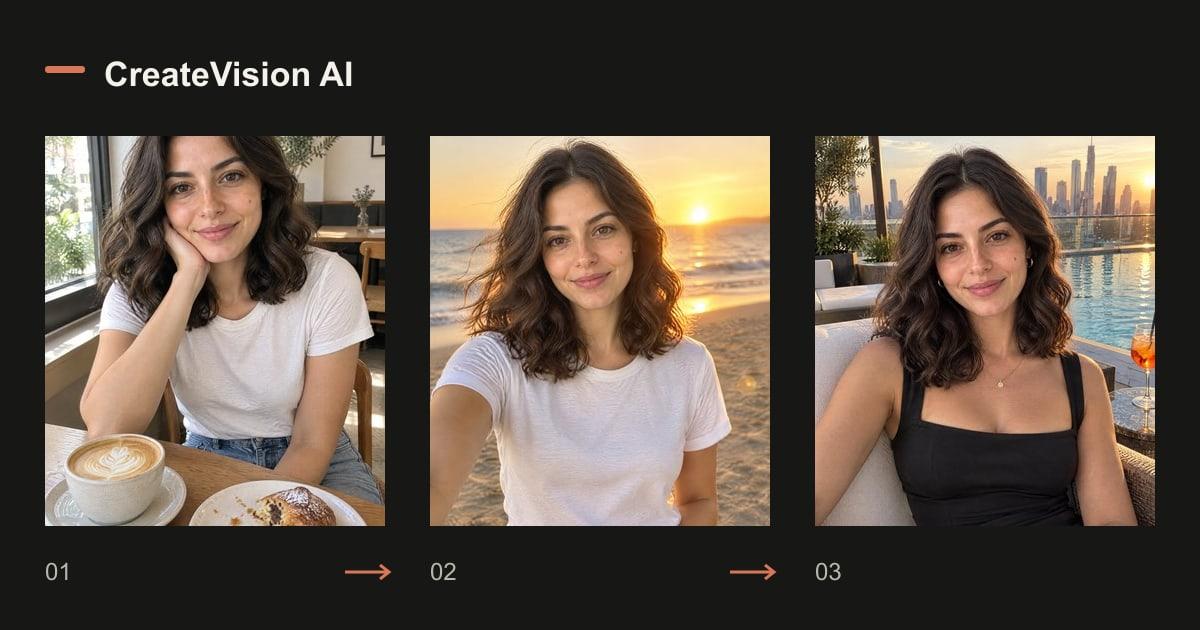
CREATEVISION AI · PRACTICAL VIDEO GUIDES
Before you start
01Use the same reference for every independent scene; do not let identity drift accumulate through repeated re-uploading.
02Keep face structure, hair, body and distinctive accessories stable while changing the setting.
03Inspect identity before turning a still into a video. A photo result does not prove video consistency.
Choose a reference that can carry the series
Use an evenly lit portrait with the face visible. Avoid heavy filters, sunglasses and extreme angles. Our examples use a fictional woman created for demonstrations, not a real person’s identity or endorsement.
In AI Influencer Generator, upload the same photo each time. The page provides scene presets and outfit/framing options. If using the separate Characters library, save the approved character and its reference views for reuse; that is a separate asset-management workflow.
Create five scenes from the same person
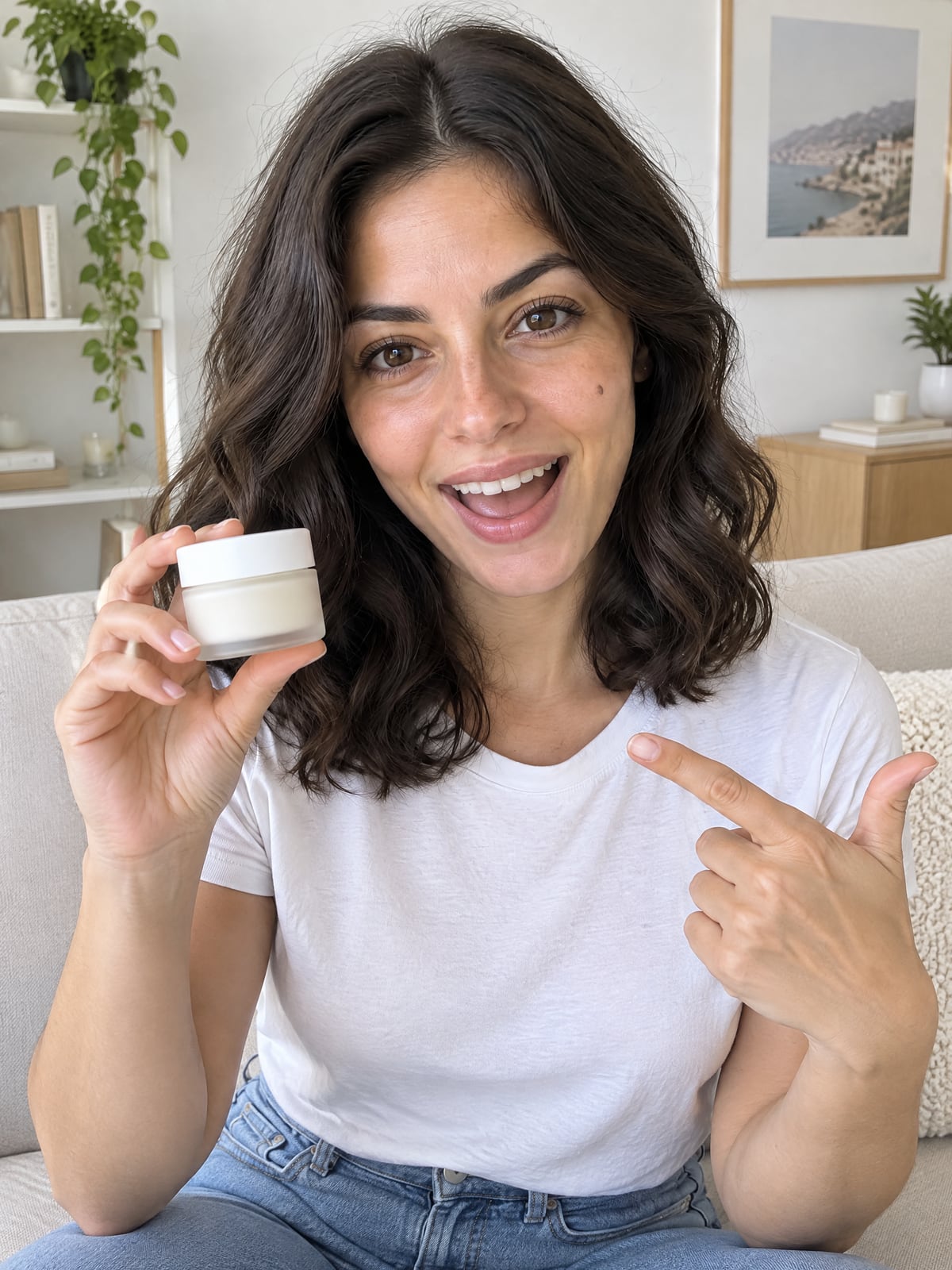
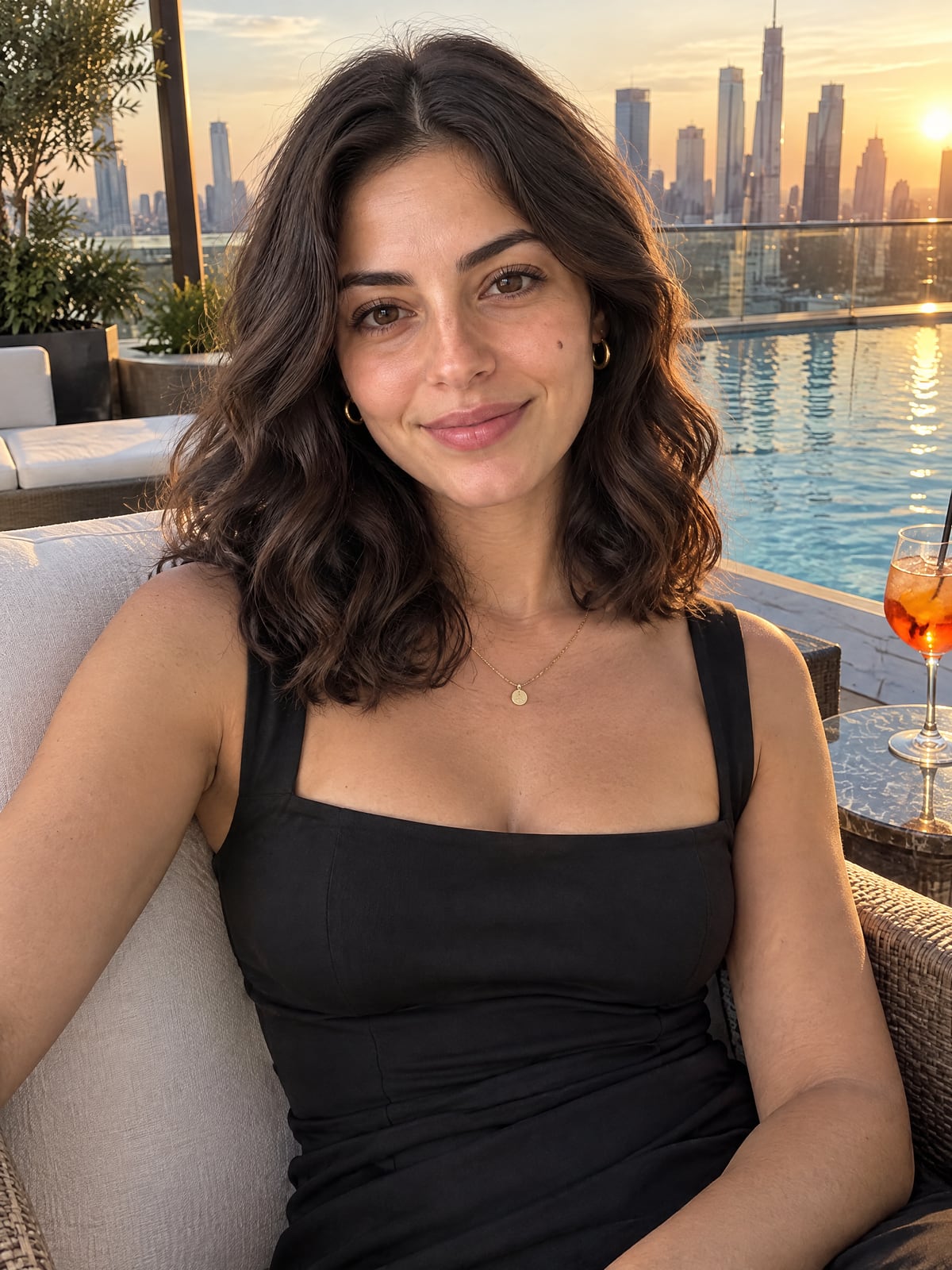
The five examples below share the original reference. They demonstrate café, beach, mirror selfie, product unboxing and hotel scenes. Outfits can vary, so evaluate identity separately from wardrobe.
Look at jaw shape, eyes, nose, hairline and body proportions. Familiar hair alone is not enough. Also inspect the mirror phone, fingers and the product in an unboxing scene.
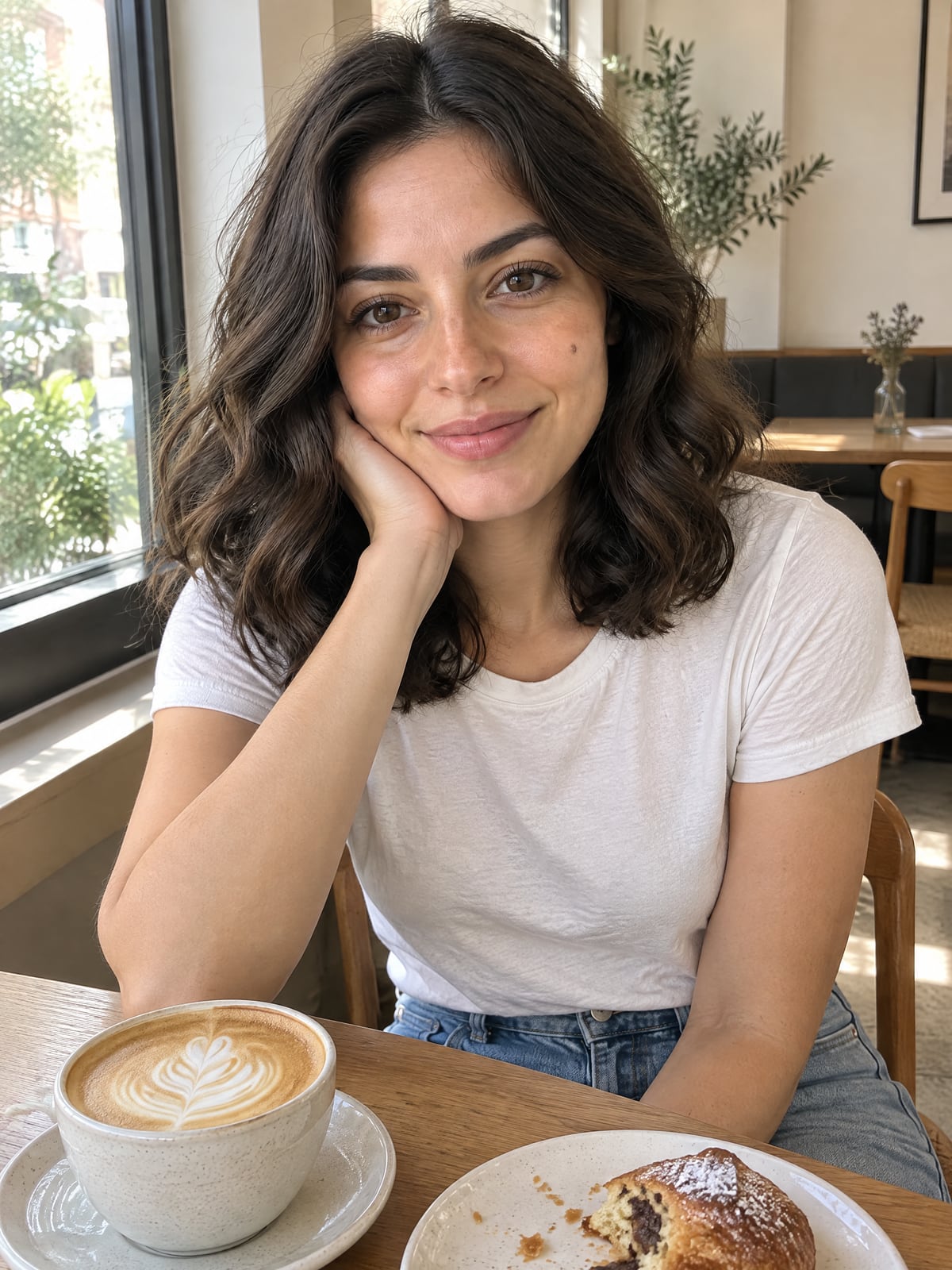
Read the original prompt
The subject is the exact person in the reference photo. Keep their face structure, eye shape and colour, nose, lips, skin tone, hairstyle and hair colour, body build and age recognisable in every detail — a follower who knows this person must recognise them instantly. Do not replace them with a generic model, do not change their age, do not slim or reshape their face or body, and do not add any other people to the scene. Scene: sitting at a window table in a bright specialty coffee shop, a latte with latte art and a half-eaten pastry on the wooden table, soft morning daylight from the window, relaxed half-smile at the camera as if a friend took the photo across the table. Outfit: casual everyday wear that suits the scene — a plain tee or knit, jeans or shorts, clean sneakers; no logos. Framing: vertical feed photo, head to hips. Shot like a real phone photo posted by a lifestyle creator: natural skin texture with pores and fine lines kept (no airbrushing, no plastic smoothing), realistic lighting with soft shadows, slight depth of field, candid framing. Photorealistic. No text, no captions, no watermark, no logos, no brand marks, no other faces in the frame.
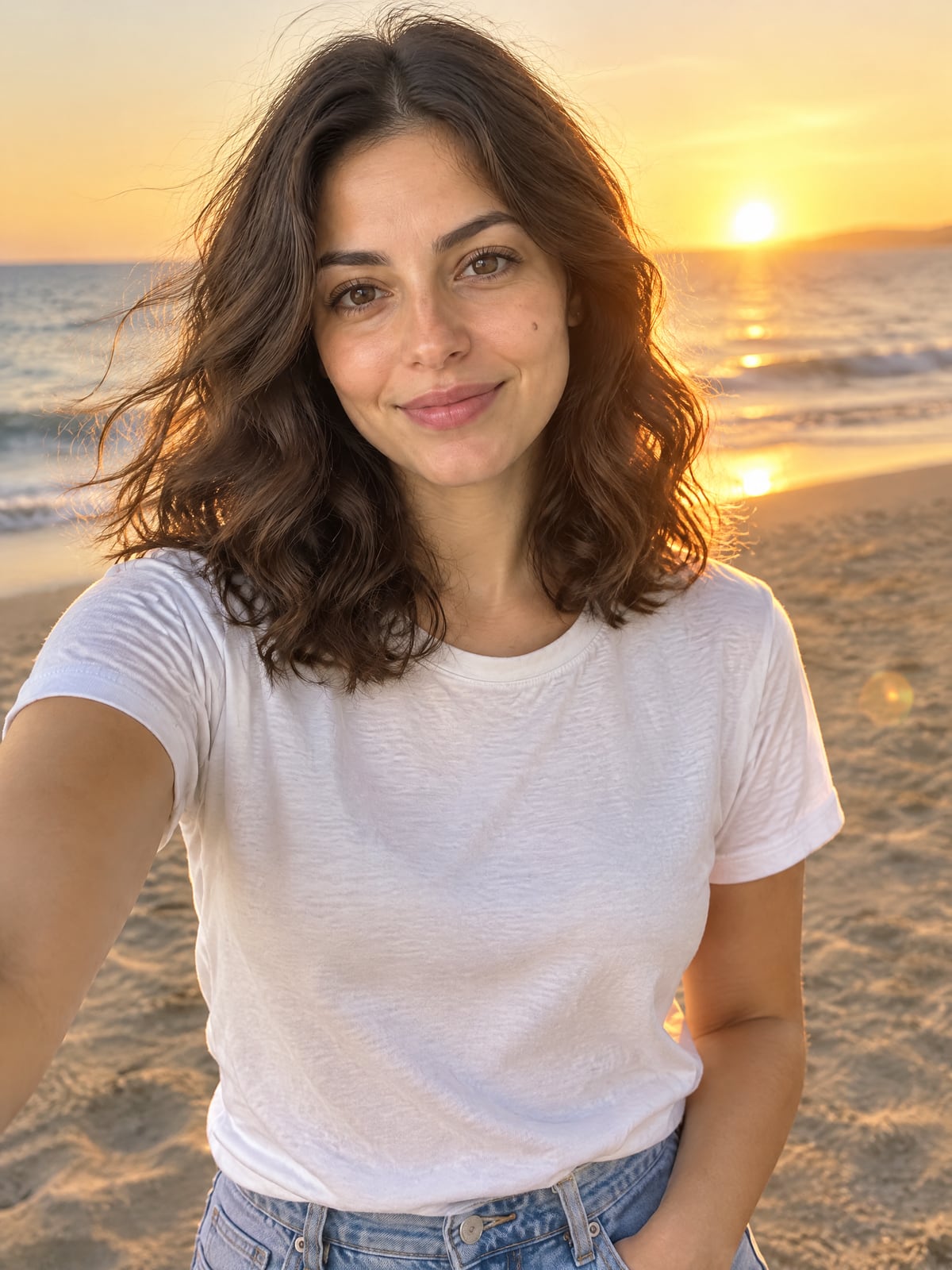
Read the original prompt
The subject is the exact person in the reference photo. Keep their face structure, eye shape and colour, nose, lips, skin tone, hairstyle and hair colour, body build and age recognisable in every detail — a follower who knows this person must recognise them instantly. Do not replace them with a generic model, do not change their age, do not slim or reshape their face or body, and do not add any other people to the scene. Scene: golden-hour on a quiet beach, sun low behind them, hair moving slightly in the breeze, sea and a soft horizon in the background, warm backlight with a gentle lens flare, carefree expression. Outfit: casual everyday wear that suits the scene — a plain tee or knit, jeans or shorts, clean sneakers; no logos. Framing: vertical feed photo, head to hips. Shot like a real phone photo posted by a lifestyle creator: natural skin texture with pores and fine lines kept (no airbrushing, no plastic smoothing), realistic lighting with soft shadows, slight depth of field, candid framing. Photorealistic. No text, no captions, no watermark, no logos, no brand marks, no other faces in the frame.
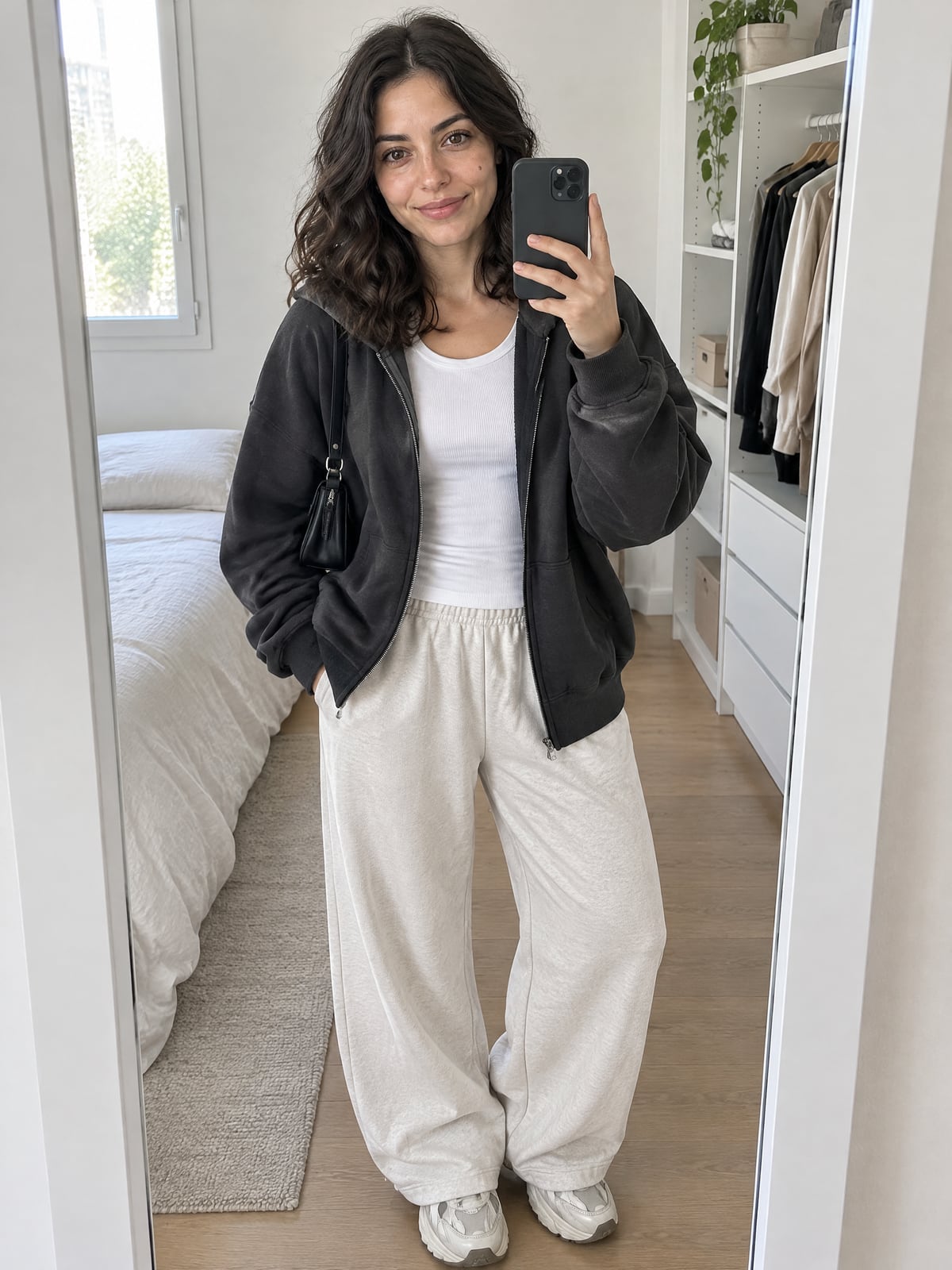
Read the original prompt
The subject is the exact person in the reference photo. Keep their face structure, eye shape and colour, nose, lips, skin tone, hairstyle and hair colour, body build and age recognisable in every detail — a follower who knows this person must recognise them instantly. Do not replace them with a generic model, do not change their age, do not slim or reshape their face or body, and do not add any other people to the scene. Scene: full-length mirror selfie in a tidy bright bedroom or walk-in closet, holding a smartphone up at chest height with one hand, the phone partly covering the face is NOT allowed — face clearly visible, outfit fully shown, natural window light, casual confident pose. Outfit: relaxed streetwear — an oversized jacket or hoodie, wide trousers, chunky sneakers, a small bag; no logos. Framing: vertical feed photo, head to hips. Shot like a real phone photo posted by a lifestyle creator: natural skin texture with pores and fine lines kept (no airbrushing, no plastic smoothing), realistic lighting with soft shadows, slight depth of field, candid framing. Photorealistic. No text, no captions, no watermark, no logos, no brand marks, no other faces in the frame.
Read the original prompt
The subject is the exact person in the reference photo. Keep their face structure, eye shape and colour, nose, lips, skin tone, hairstyle and hair colour, body build and age recognisable in every detail — a follower who knows this person must recognise them instantly. Do not replace them with a generic model, do not change their age, do not slim or reshape their face or body, and do not add any other people to the scene. Scene: holding up a small unbranded product (a skincare jar, a pair of headphones or a sleek gadget — no logos) toward the camera with an excited expression, sitting on a sofa or at a vanity with a ring-light glow in the eyes, a tidy bright living room behind. Outfit: casual everyday wear that suits the scene — a plain tee or knit, jeans or shorts, clean sneakers; no logos. Framing: vertical feed photo, head to hips. Shot like a real phone photo posted by a lifestyle creator: natural skin texture with pores and fine lines kept (no airbrushing, no plastic smoothing), realistic lighting with soft shadows, slight depth of field, candid framing. Photorealistic. No text, no captions, no watermark, no logos, no brand marks, no other faces in the frame.
Read the original prompt
The subject is the exact person in the reference photo. Keep their face structure, eye shape and colour, nose, lips, skin tone, hairstyle and hair colour, body build and age recognisable in every detail — a follower who knows this person must recognise them instantly. Do not replace them with a generic model, do not change their age, do not slim or reshape their face or body, and do not add any other people to the scene. Scene: lounging by a luxury hotel rooftop pool with a city skyline behind, a drink on the side table, late-afternoon sun, polished editorial-travel feel, relaxed and unbothered. Outfit: polished evening look — an elegant dress or a fitted dark suit, subtle jewellery, well-groomed; tasteful, fully clothed. Framing: vertical feed photo, head to hips. Shot like a real phone photo posted by a lifestyle creator: natural skin texture with pores and fine lines kept (no airbrushing, no plastic smoothing), realistic lighting with soft shadows, slight depth of field, candid framing. Photorealistic. No text, no captions, no watermark, no logos, no brand marks, no other faces in the frame.
Loading an example fills a draft. Review the settings and current quote before generating.
Say what must stay the same
The production prompt names the identity constraints before the scene description. It asks for a natural phone-photo appearance rather than a polished generic model. For your own series, add a short specific instruction only when the preset needs it.
Generate each scene from the approved original instead of making every new image depend on a drifting previous result. Keep a contact sheet so that changes become obvious across the series.
Manage identity and styling as separate choices
A consistent identity may wear different clothes, but a product campaign may need the same outfit too. Decide which details are fixed before generating. Keep the reference, chosen scene, outfit and framing together with the approved output.
The dedicated influencer page creates lifestyle photos; the separate subject library can store reusable references and character sheets. Do not assume that every photo output automatically becomes a saved character or transfers into every video tool.
Turn an approved photo into a short video
Choose the strongest still and open an image-to-video workflow. Start with a small head turn, a restrained walk or a gentle camera movement. Keep the action simple enough to inspect.
Carry the approved image into the video draft and compare the face during movement. If using a role-replacement template, check whether the selected scene supports your character’s framing and body proportions. Video quality must be reviewed separately from the photo series.
Budget for a series you can actually use
Create one scene first and judge it before committing to the remaining four. Use the live quote for the chosen image model and quality. Changing model or resolution changes the cost and can change the appearance.
The examples document the production workflow and original reference. They are not a measured identity success rate, an automatic publishing system or a promise of follower growth. Choose a plan around approved output volume, not the number of generations you hope to keep.
Questions before generating
Will every scene preserve the face perfectly?
No. Reference constraints help, but you must inspect every result. Simplify scene and styling changes when the face drifts.
Can I create a virtual person rather than use my own photo?
Yes. Create and approve a fictional character first, then reuse its reference in supported workflows.
Do the photo presets automatically make a video?
No. The influencer page creates still photos. Use an image-to-video workflow for motion and review that result separately.
Compare plans and credit packs
Know the volume you need? Compare membership credits with a one-time credit pack before choosing. Your draft stays under your control.