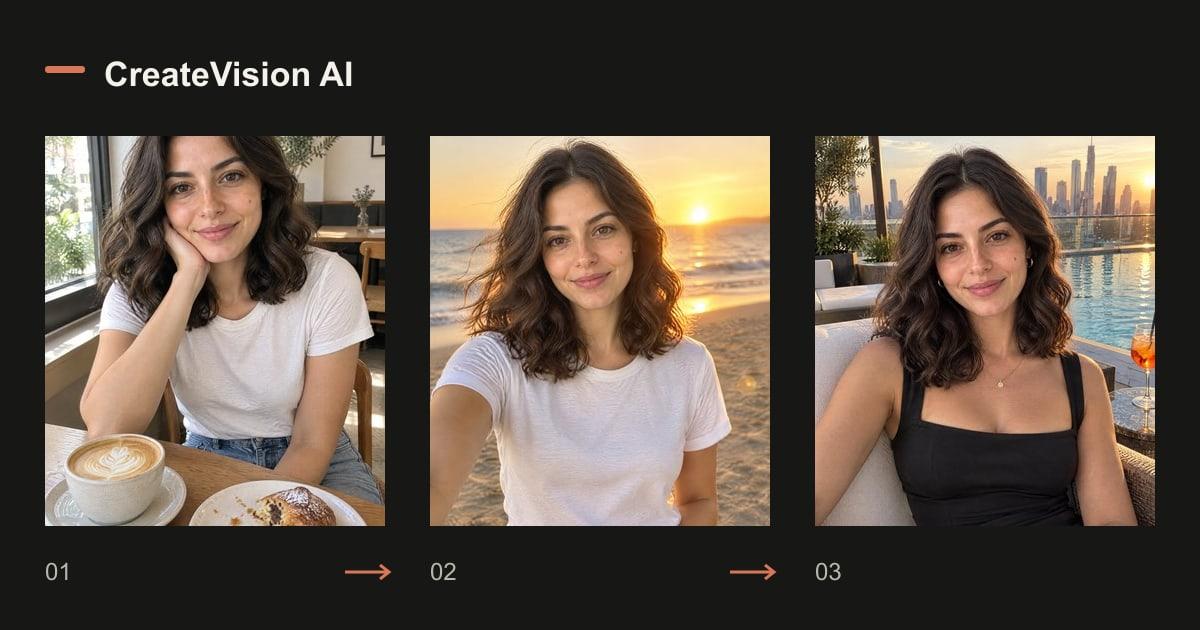
CREATEVISION AI · GUIDES VIDÉO PRATIQUES
Avant de commencer
01Utilisez la même référence pour chaque scène indépendante ; ne laissez pas la dérive d’identité s’accumuler par des re-téléversements répétés.
02Gardez la structure du visage, les cheveux, le corps et les accessoires distinctifs stables tout en changeant le décor.
03Inspectez l’identité avant de transformer une image fixe en vidéo. Un résultat photo ne prouve pas la cohérence vidéo.
Choisissez une référence capable de porter la série
Utilisez un portrait uniformément éclairé avec le visage visible. Évitez les filtres lourds, les lunettes de soleil et les angles extrêmes. Nos exemples utilisent une femme fictive créée pour les démonstrations, et non l’identité ou l’approbation d’une personne réelle.
Dans AI Influencer Generator, téléchargez la même photo à chaque fois. La page propose des préréglages de scène et des options de tenue/cadrage. Si vous utilisez la bibliothèque Characters séparée, enregistrez le personnage approuvé et ses vues de référence pour les réutiliser ; il s’agit d’un flux de gestion des ressources distinct.
Créez cinq scènes à partir de la même personne
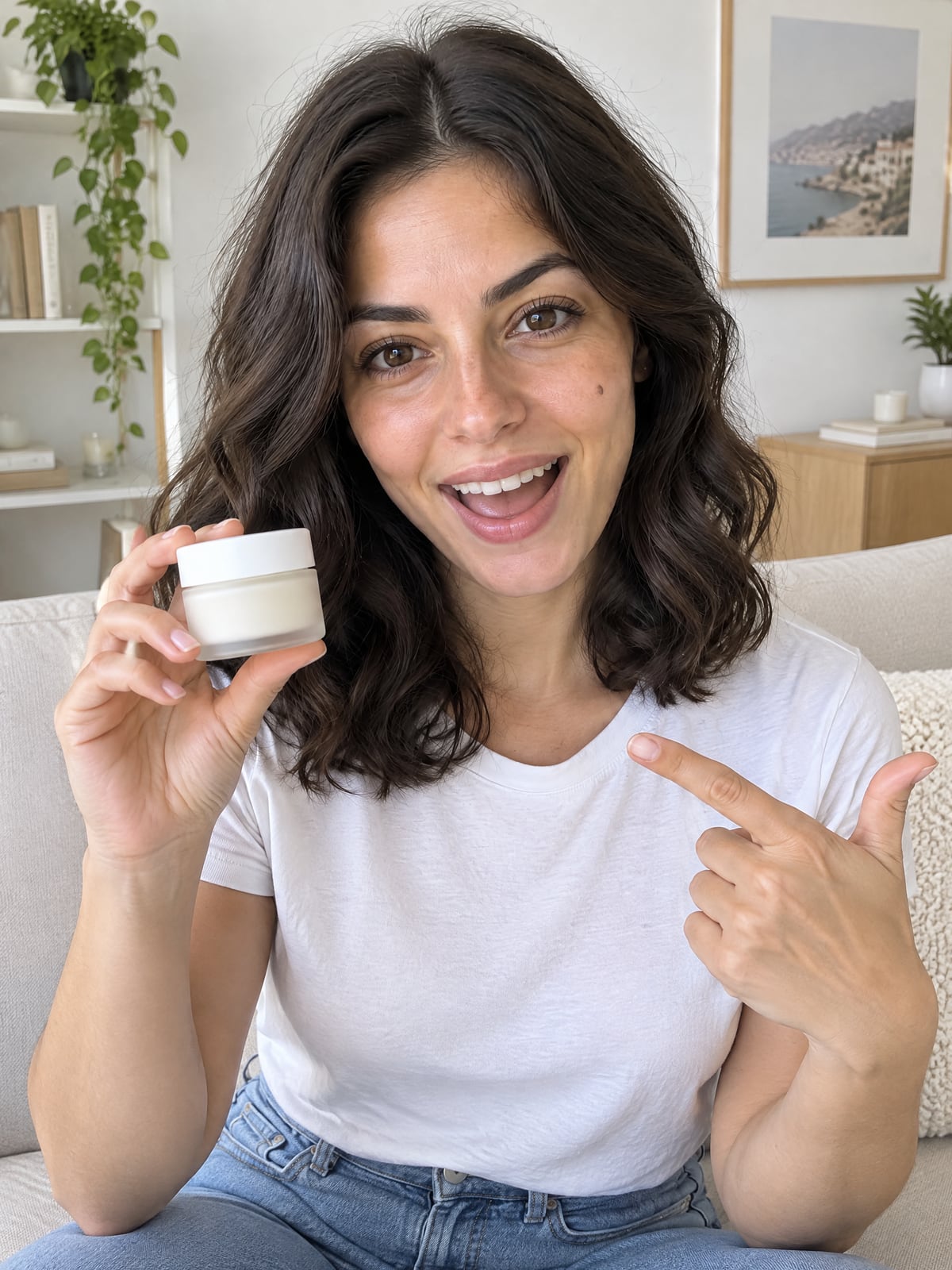
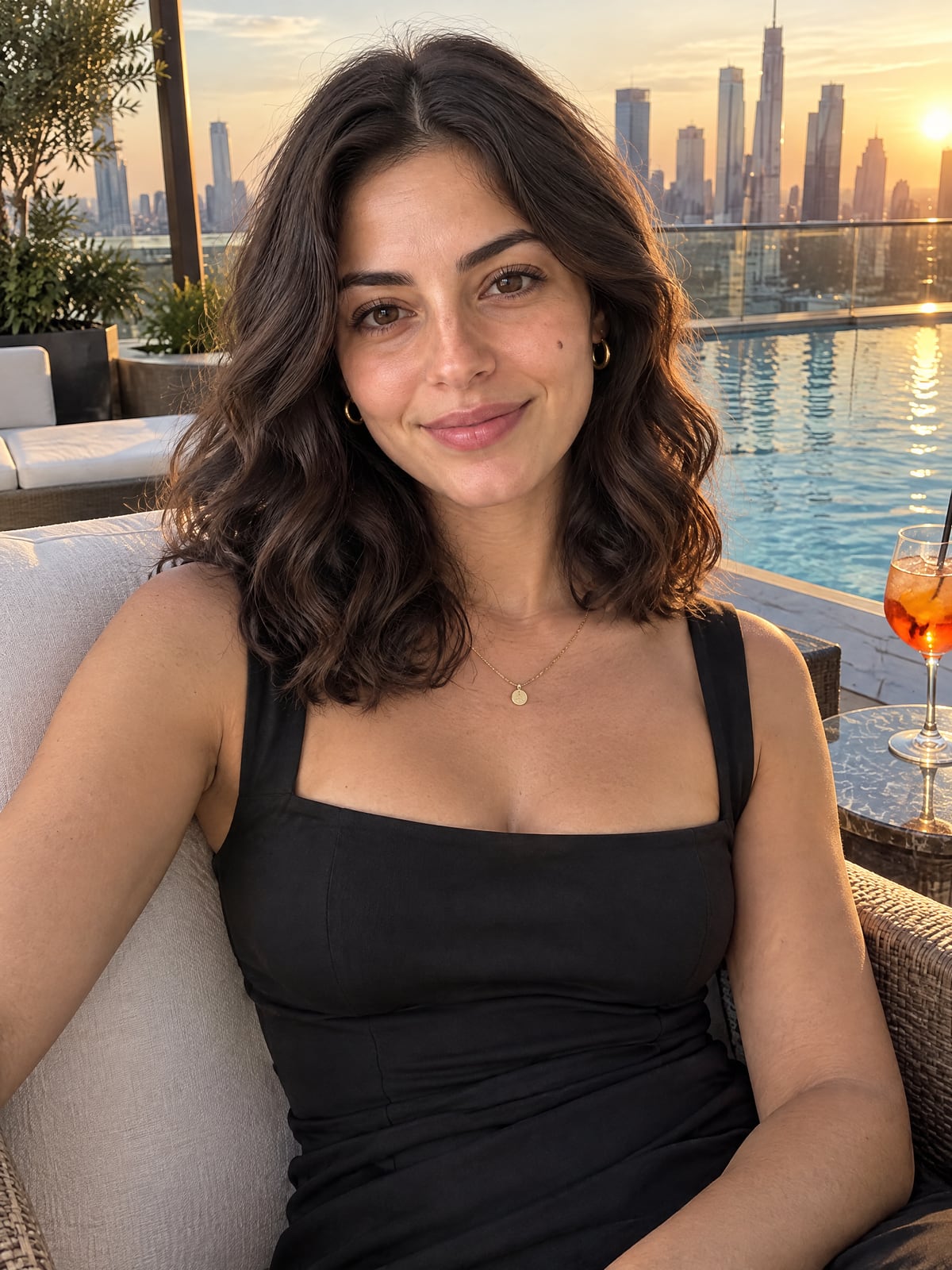
Les cinq exemples ci-dessous partagent la référence originale. Ils illustrent des scènes de café, de plage, de selfie dans le miroir, de déballage de produit et d’hôtel. Les tenues peuvent varier, donc évaluez l’identité séparément de la garde-robe.
Observez la forme de la mâchoire, les yeux, le nez, la ligne des cheveux et les proportions du corps. Des cheveux familiers ne suffisent pas. Inspectez aussi le téléphone dans le miroir, les doigts et le produit dans une scène de déballage.
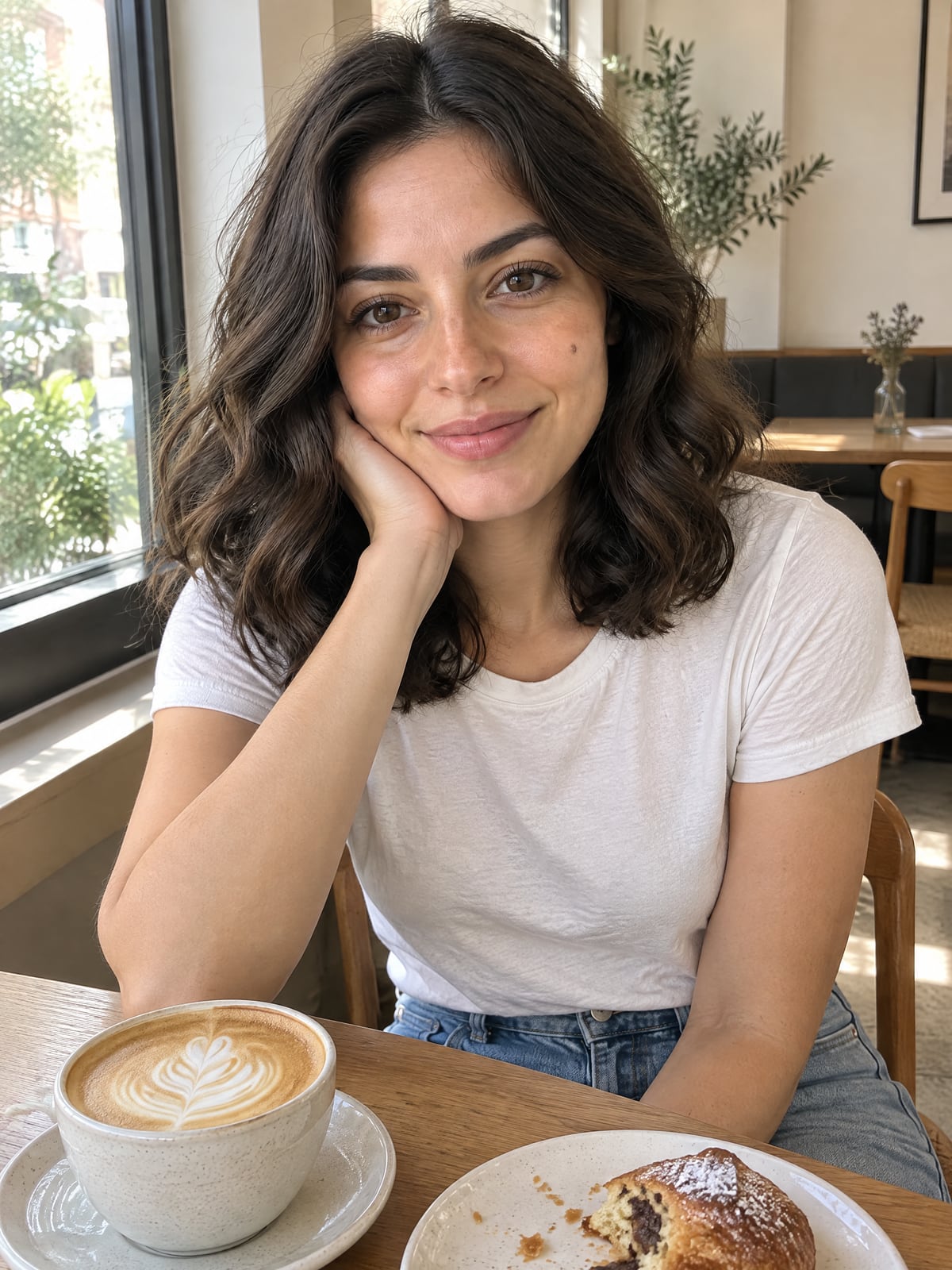
Lire le prompt original
The subject is the exact person in the reference photo. Keep their face structure, eye shape and colour, nose, lips, skin tone, hairstyle and hair colour, body build and age recognisable in every detail — a follower who knows this person must recognise them instantly. Do not replace them with a generic model, do not change their age, do not slim or reshape their face or body, and do not add any other people to the scene. Scene: sitting at a window table in a bright specialty coffee shop, a latte with latte art and a half-eaten pastry on the wooden table, soft morning daylight from the window, relaxed half-smile at the camera as if a friend took the photo across the table. Outfit: casual everyday wear that suits the scene — a plain tee or knit, jeans or shorts, clean sneakers; no logos. Framing: vertical feed photo, head to hips. Shot like a real phone photo posted by a lifestyle creator: natural skin texture with pores and fine lines kept (no airbrushing, no plastic smoothing), realistic lighting with soft shadows, slight depth of field, candid framing. Photorealistic. No text, no captions, no watermark, no logos, no brand marks, no other faces in the frame.
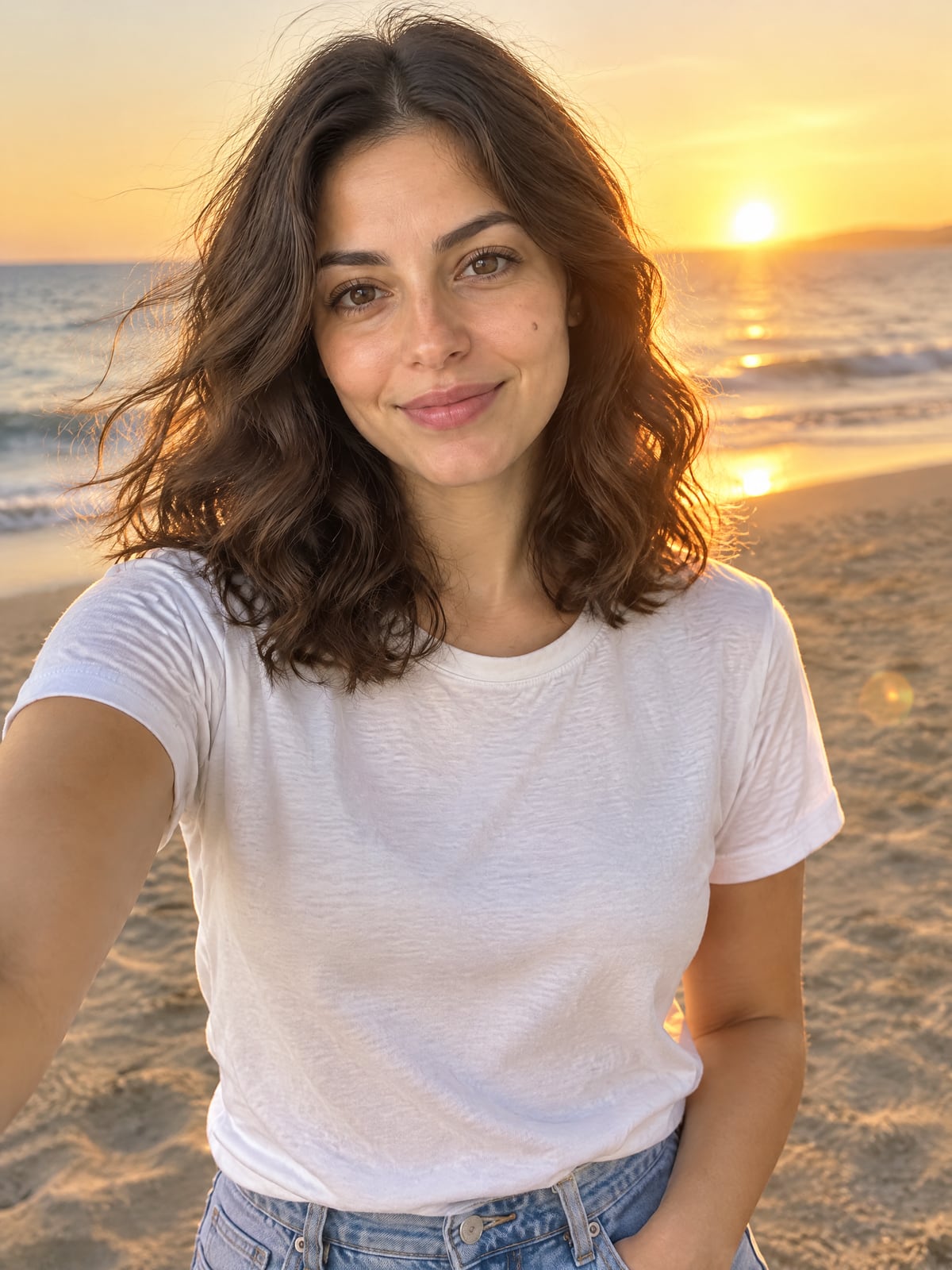
Lire le prompt original
The subject is the exact person in the reference photo. Keep their face structure, eye shape and colour, nose, lips, skin tone, hairstyle and hair colour, body build and age recognisable in every detail — a follower who knows this person must recognise them instantly. Do not replace them with a generic model, do not change their age, do not slim or reshape their face or body, and do not add any other people to the scene. Scene: golden-hour on a quiet beach, sun low behind them, hair moving slightly in the breeze, sea and a soft horizon in the background, warm backlight with a gentle lens flare, carefree expression. Outfit: casual everyday wear that suits the scene — a plain tee or knit, jeans or shorts, clean sneakers; no logos. Framing: vertical feed photo, head to hips. Shot like a real phone photo posted by a lifestyle creator: natural skin texture with pores and fine lines kept (no airbrushing, no plastic smoothing), realistic lighting with soft shadows, slight depth of field, candid framing. Photorealistic. No text, no captions, no watermark, no logos, no brand marks, no other faces in the frame.
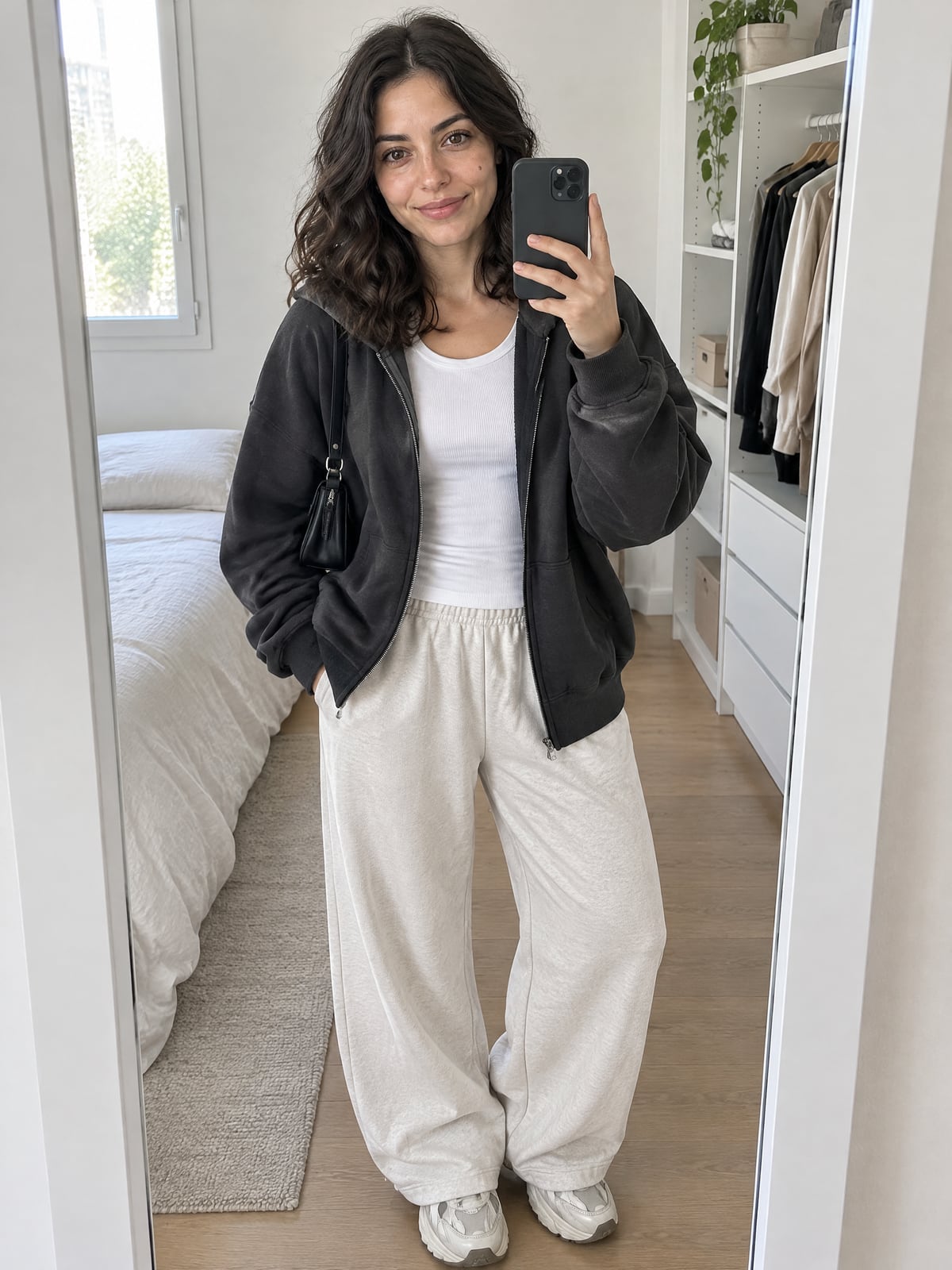
Lire le prompt original
The subject is the exact person in the reference photo. Keep their face structure, eye shape and colour, nose, lips, skin tone, hairstyle and hair colour, body build and age recognisable in every detail — a follower who knows this person must recognise them instantly. Do not replace them with a generic model, do not change their age, do not slim or reshape their face or body, and do not add any other people to the scene. Scene: full-length mirror selfie in a tidy bright bedroom or walk-in closet, holding a smartphone up at chest height with one hand, the phone partly covering the face is NOT allowed — face clearly visible, outfit fully shown, natural window light, casual confident pose. Outfit: relaxed streetwear — an oversized jacket or hoodie, wide trousers, chunky sneakers, a small bag; no logos. Framing: vertical feed photo, head to hips. Shot like a real phone photo posted by a lifestyle creator: natural skin texture with pores and fine lines kept (no airbrushing, no plastic smoothing), realistic lighting with soft shadows, slight depth of field, candid framing. Photorealistic. No text, no captions, no watermark, no logos, no brand marks, no other faces in the frame.
Lire le prompt original
The subject is the exact person in the reference photo. Keep their face structure, eye shape and colour, nose, lips, skin tone, hairstyle and hair colour, body build and age recognisable in every detail — a follower who knows this person must recognise them instantly. Do not replace them with a generic model, do not change their age, do not slim or reshape their face or body, and do not add any other people to the scene. Scene: holding up a small unbranded product (a skincare jar, a pair of headphones or a sleek gadget — no logos) toward the camera with an excited expression, sitting on a sofa or at a vanity with a ring-light glow in the eyes, a tidy bright living room behind. Outfit: casual everyday wear that suits the scene — a plain tee or knit, jeans or shorts, clean sneakers; no logos. Framing: vertical feed photo, head to hips. Shot like a real phone photo posted by a lifestyle creator: natural skin texture with pores and fine lines kept (no airbrushing, no plastic smoothing), realistic lighting with soft shadows, slight depth of field, candid framing. Photorealistic. No text, no captions, no watermark, no logos, no brand marks, no other faces in the frame.
Lire le prompt original
The subject is the exact person in the reference photo. Keep their face structure, eye shape and colour, nose, lips, skin tone, hairstyle and hair colour, body build and age recognisable in every detail — a follower who knows this person must recognise them instantly. Do not replace them with a generic model, do not change their age, do not slim or reshape their face or body, and do not add any other people to the scene. Scene: lounging by a luxury hotel rooftop pool with a city skyline behind, a drink on the side table, late-afternoon sun, polished editorial-travel feel, relaxed and unbothered. Outfit: polished evening look — an elegant dress or a fitted dark suit, subtle jewellery, well-groomed; tasteful, fully clothed. Framing: vertical feed photo, head to hips. Shot like a real phone photo posted by a lifestyle creator: natural skin texture with pores and fine lines kept (no airbrushing, no plastic smoothing), realistic lighting with soft shadows, slight depth of field, candid framing. Photorealistic. No text, no captions, no watermark, no logos, no brand marks, no other faces in the frame.
Charger un exemple remplit un brouillon. Vérifiez les paramètres et le devis actuel avant de générer.
Dites ce qui doit rester identique
Le prompt de production nomme les contraintes d’identité avant la description de la scène. Il demande une apparence naturelle de photo prise au téléphone plutôt qu’un mannequin générique trop lisse. Pour votre propre série, ajoutez une courte instruction spécifique uniquement lorsque le préréglage en a besoin.
Générez chaque scène à partir de l’original approuvé au lieu de faire dépendre chaque nouvelle image d’un résultat précédent qui dérive. Conservez une planche contact pour que les changements deviennent évidents dans toute la série.
Gérez l’identité et le style comme des choix séparés
Une identité cohérente peut porter des vêtements différents, mais une campagne produit peut aussi nécessiter la même tenue. Décidez quels détails sont fixes avant de générer. Conservez la référence, la scène choisie, la tenue et le cadrage avec le résultat approuvé.
La page dédiée aux influenceurs crée des photos lifestyle ; la bibliothèque de sujets séparée peut stocker des références réutilisables et des fiches de personnage. Ne supposez pas que chaque résultat photo devient automatiquement un personnage enregistré ou se transfère dans tous les outils vidéo.
Transformez une photo approuvée en courte vidéo
Choisissez l’image fixe la plus forte et ouvrez un flux image-to-video. Commencez par un petit mouvement de tête, une marche retenue ou un léger mouvement de caméra. Gardez l’action assez simple à inspecter.
Transférez l’image approuvée dans le brouillon vidéo et comparez le visage pendant le mouvement. Si vous utilisez un modèle de remplacement de rôle, vérifiez si la scène sélectionnée prend en charge le cadrage et les proportions corporelles de votre personnage. La qualité vidéo doit être examinée séparément de la série photo.
Prévoyez un budget pour une série que vous pouvez réellement utiliser
Créez d’abord une scène et jugez-la avant de vous engager sur les quatre restantes. Utilisez le devis en direct pour le modèle d’image et la qualité choisis. Changer de modèle ou de résolution modifie le coût et peut modifier l’apparence.
Les exemples documentent le flux de production et la référence originale. Ils ne constituent pas un taux de réussite d’identité mesuré, un système de publication automatique ni une promesse de croissance d’audience. Choisissez une formule en fonction du volume de résultats approuvés, et non du nombre de générations que vous espérez conserver.
Questions avant de générer
Chaque scène préservera-t-elle parfaitement le visage ?
Non. Les contraintes de référence aident, mais vous devez inspecter chaque résultat. Simplifiez les changements de scène et de style lorsque le visage dérive.
Puis-je créer une personne virtuelle plutôt que d’utiliser ma propre photo ?
Oui. Créez et approuvez d’abord un personnage fictif, puis réutilisez sa référence dans les flux pris en charge.
Les préréglages photo créent-ils automatiquement une vidéo ?
Non. La page influenceur crée des photos fixes. Utilisez un flux image-to-video pour le mouvement et examinez ce résultat séparément.
Comparez les forfaits et les packs de crédits
Vous connaissez le volume dont vous avez besoin ? Comparez les crédits d'adhésion avec un pack de crédits unique avant de choisir. Votre brouillon reste sous votre contrôle.