CREATEVISION AI · PRAKTISCHE VIDEO-ANLEITUNGEN
Bevor Sie beginnen
01Verwenden Sie dieselbe Referenz für jede unabhängige Szene; lassen Sie nicht zu, dass sich Identitätsdrift durch wiederholtes erneutes Hochladen ansammelt.
02Gesichtsstruktur, Haare, Körper und markante Accessoires stabil halten, während die Umgebung geändert wird.
03Identität prüfen, bevor ein Standbild in ein Video umgewandelt wird. Ein Fotoergebnis beweist keine Videokonsistenz.
Eine Referenz wählen, die die Serie tragen kann
Ein gleichmäßig beleuchtetes Porträt mit sichtbarem Gesicht verwenden. Starke Filter, Sonnenbrillen und extreme Winkel vermeiden. Unsere Beispiele verwenden eine fiktive Frau, die für Demonstrationen erstellt wurde, nicht die Identität oder Billigung einer realen Person.
Im AI Influencer Generator jedes Mal dasselbe Foto hochladen. Die Seite bietet Szenen-Voreinstellungen und Optionen für Outfit/Bildausschnitt. Bei Verwendung der separaten Characters-Bibliothek den genehmigten Charakter und seine Referenzansichten zur Wiederverwendung speichern; das ist ein separater Asset-Management-Workflow.
Fünf Szenen aus derselben Person erstellen
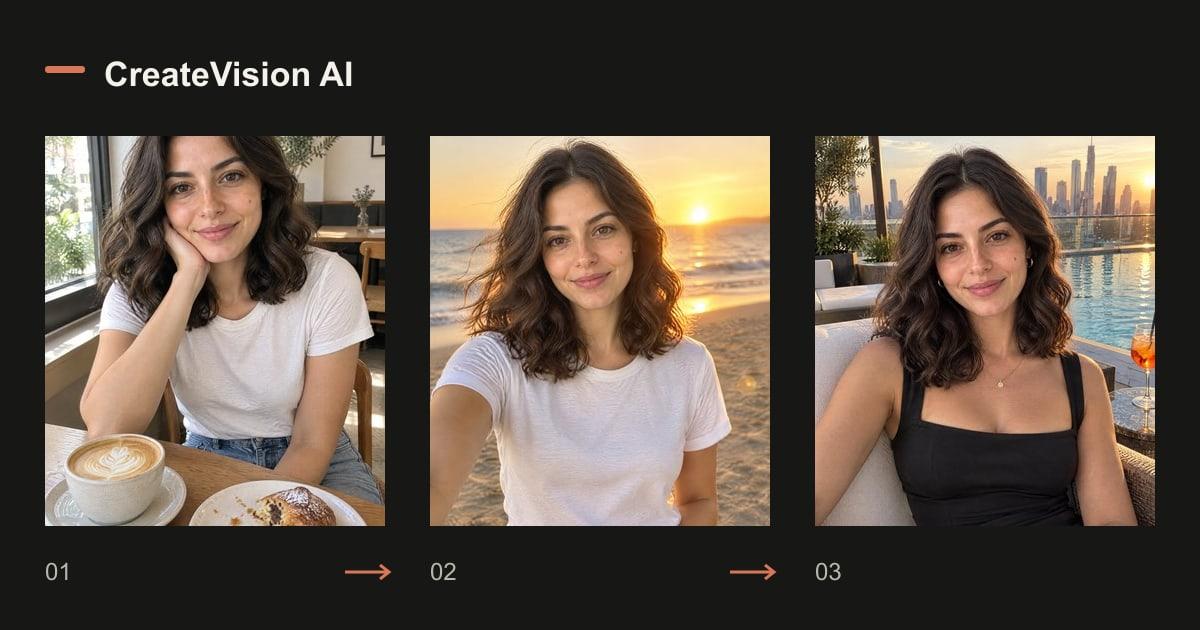
Die fünf Beispiele unten teilen die ursprüngliche Referenz. Sie demonstrieren Café-, Strand-, Spiegel-Selfie-, Produkt-Unboxing- und Hotelszenen. Outfits können variieren, daher die Identität getrennt von der Garderobe bewerten.
Auf Kieferform, Augen, Nase, Haaransatz und Körperproportionen achten. Vertrautes Haar allein reicht nicht aus. Auch das Spiegeltelefon, die Finger und das Produkt in einer Unboxing-Szene prüfen.
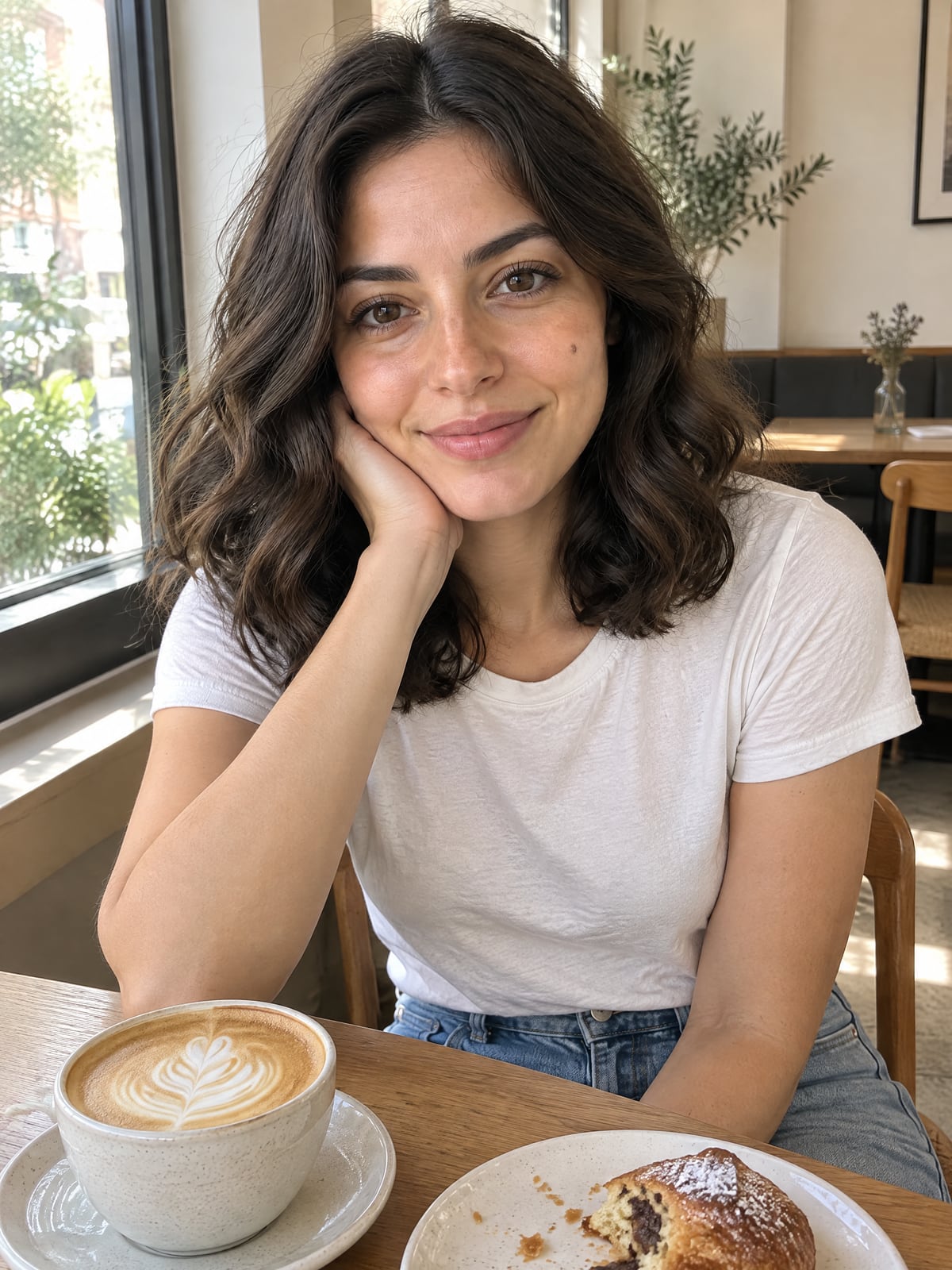
Den ursprünglichen Prompt lesen
The subject is the exact person in the reference photo. Keep their face structure, eye shape and colour, nose, lips, skin tone, hairstyle and hair colour, body build and age recognisable in every detail — a follower who knows this person must recognise them instantly. Do not replace them with a generic model, do not change their age, do not slim or reshape their face or body, and do not add any other people to the scene. Scene: sitting at a window table in a bright specialty coffee shop, a latte with latte art and a half-eaten pastry on the wooden table, soft morning daylight from the window, relaxed half-smile at the camera as if a friend took the photo across the table. Outfit: casual everyday wear that suits the scene — a plain tee or knit, jeans or shorts, clean sneakers; no logos. Framing: vertical feed photo, head to hips. Shot like a real phone photo posted by a lifestyle creator: natural skin texture with pores and fine lines kept (no airbrushing, no plastic smoothing), realistic lighting with soft shadows, slight depth of field, candid framing. Photorealistic. No text, no captions, no watermark, no logos, no brand marks, no other faces in the frame.
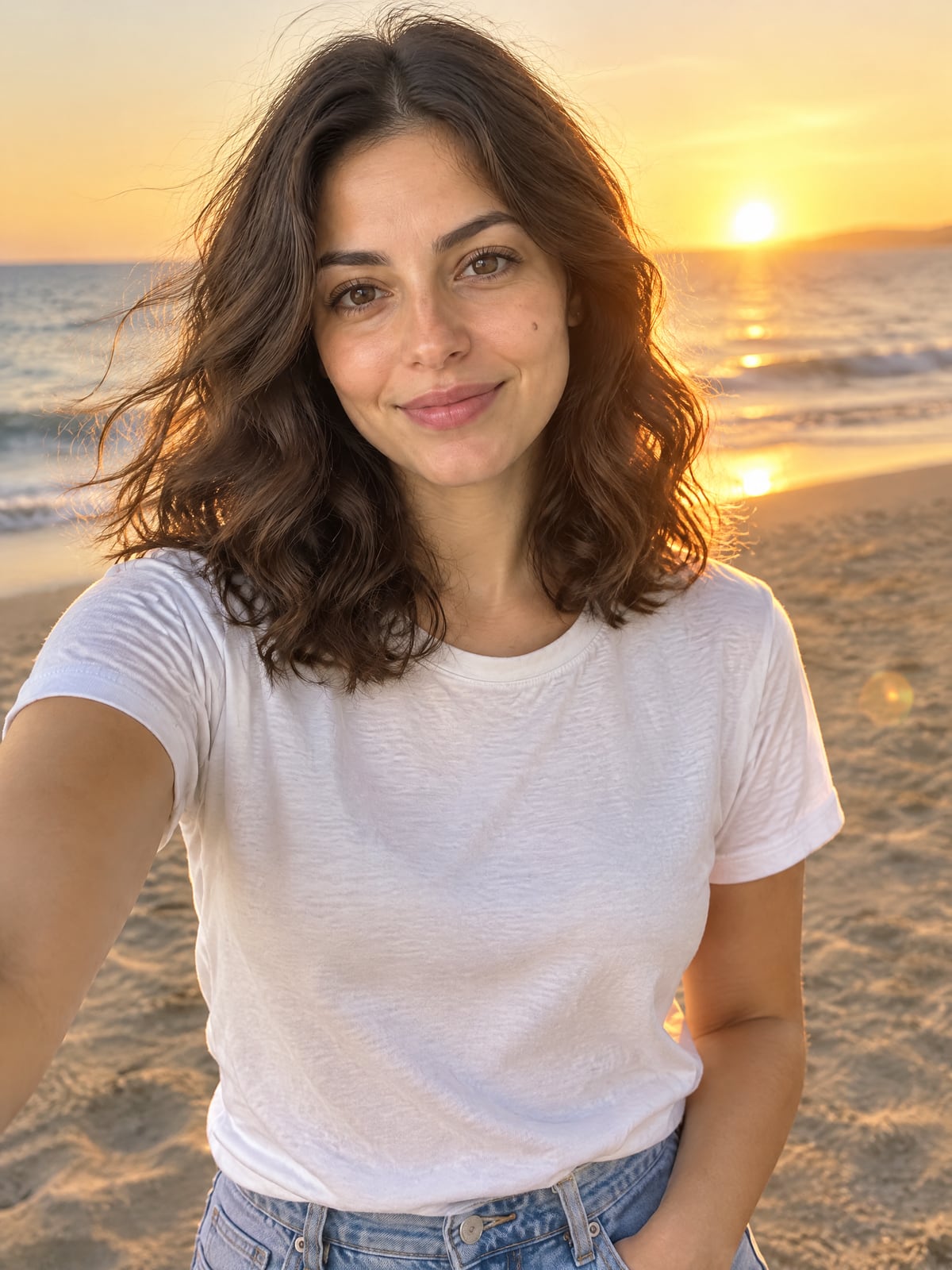
Den ursprünglichen Prompt lesen
The subject is the exact person in the reference photo. Keep their face structure, eye shape and colour, nose, lips, skin tone, hairstyle and hair colour, body build and age recognisable in every detail — a follower who knows this person must recognise them instantly. Do not replace them with a generic model, do not change their age, do not slim or reshape their face or body, and do not add any other people to the scene. Scene: golden-hour on a quiet beach, sun low behind them, hair moving slightly in the breeze, sea and a soft horizon in the background, warm backlight with a gentle lens flare, carefree expression. Outfit: casual everyday wear that suits the scene — a plain tee or knit, jeans or shorts, clean sneakers; no logos. Framing: vertical feed photo, head to hips. Shot like a real phone photo posted by a lifestyle creator: natural skin texture with pores and fine lines kept (no airbrushing, no plastic smoothing), realistic lighting with soft shadows, slight depth of field, candid framing. Photorealistic. No text, no captions, no watermark, no logos, no brand marks, no other faces in the frame.
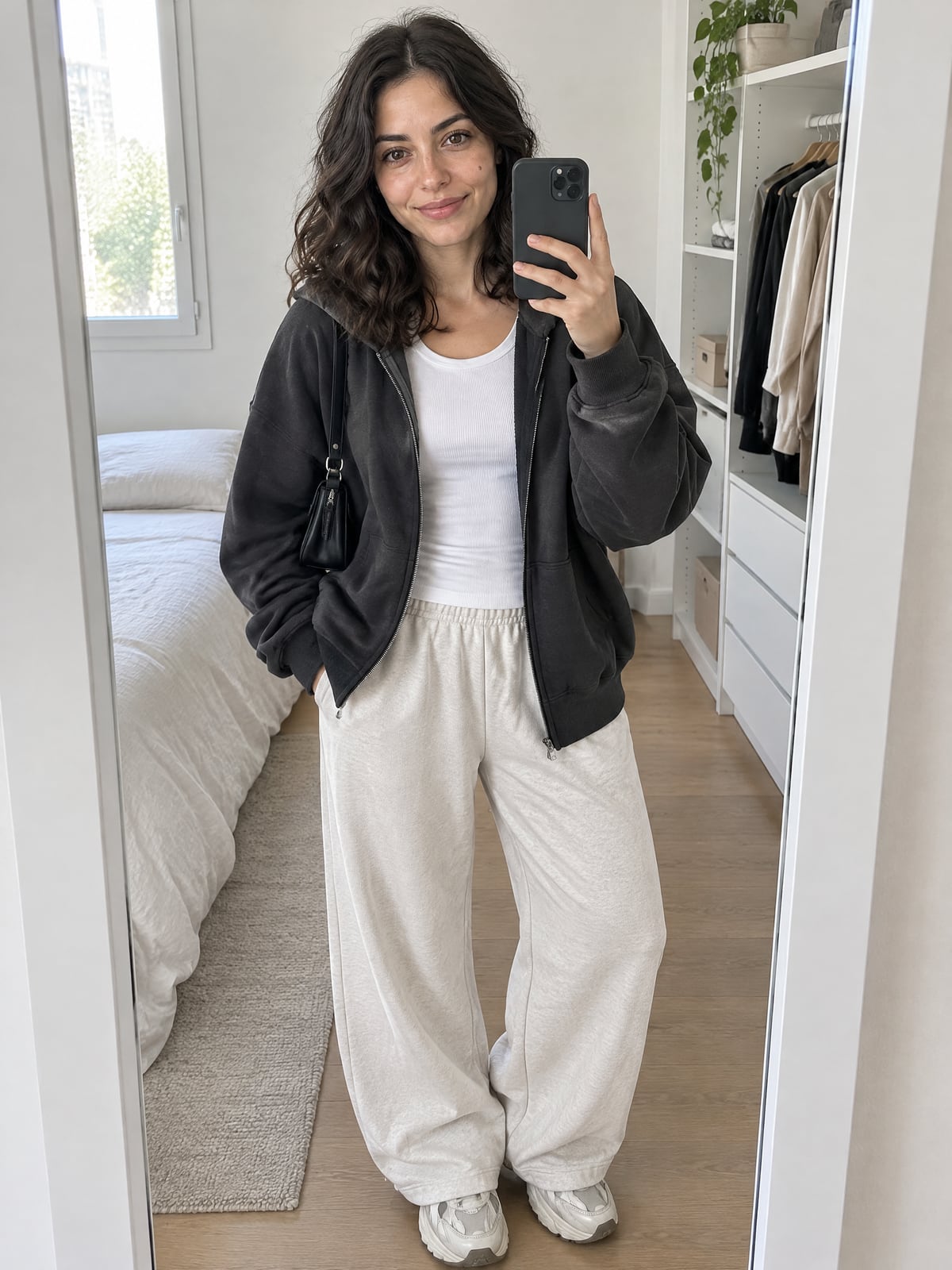
Den ursprünglichen Prompt lesen
The subject is the exact person in the reference photo. Keep their face structure, eye shape and colour, nose, lips, skin tone, hairstyle and hair colour, body build and age recognisable in every detail — a follower who knows this person must recognise them instantly. Do not replace them with a generic model, do not change their age, do not slim or reshape their face or body, and do not add any other people to the scene. Scene: full-length mirror selfie in a tidy bright bedroom or walk-in closet, holding a smartphone up at chest height with one hand, the phone partly covering the face is NOT allowed — face clearly visible, outfit fully shown, natural window light, casual confident pose. Outfit: relaxed streetwear — an oversized jacket or hoodie, wide trousers, chunky sneakers, a small bag; no logos. Framing: vertical feed photo, head to hips. Shot like a real phone photo posted by a lifestyle creator: natural skin texture with pores and fine lines kept (no airbrushing, no plastic smoothing), realistic lighting with soft shadows, slight depth of field, candid framing. Photorealistic. No text, no captions, no watermark, no logos, no brand marks, no other faces in the frame.
Den ursprünglichen Prompt lesen
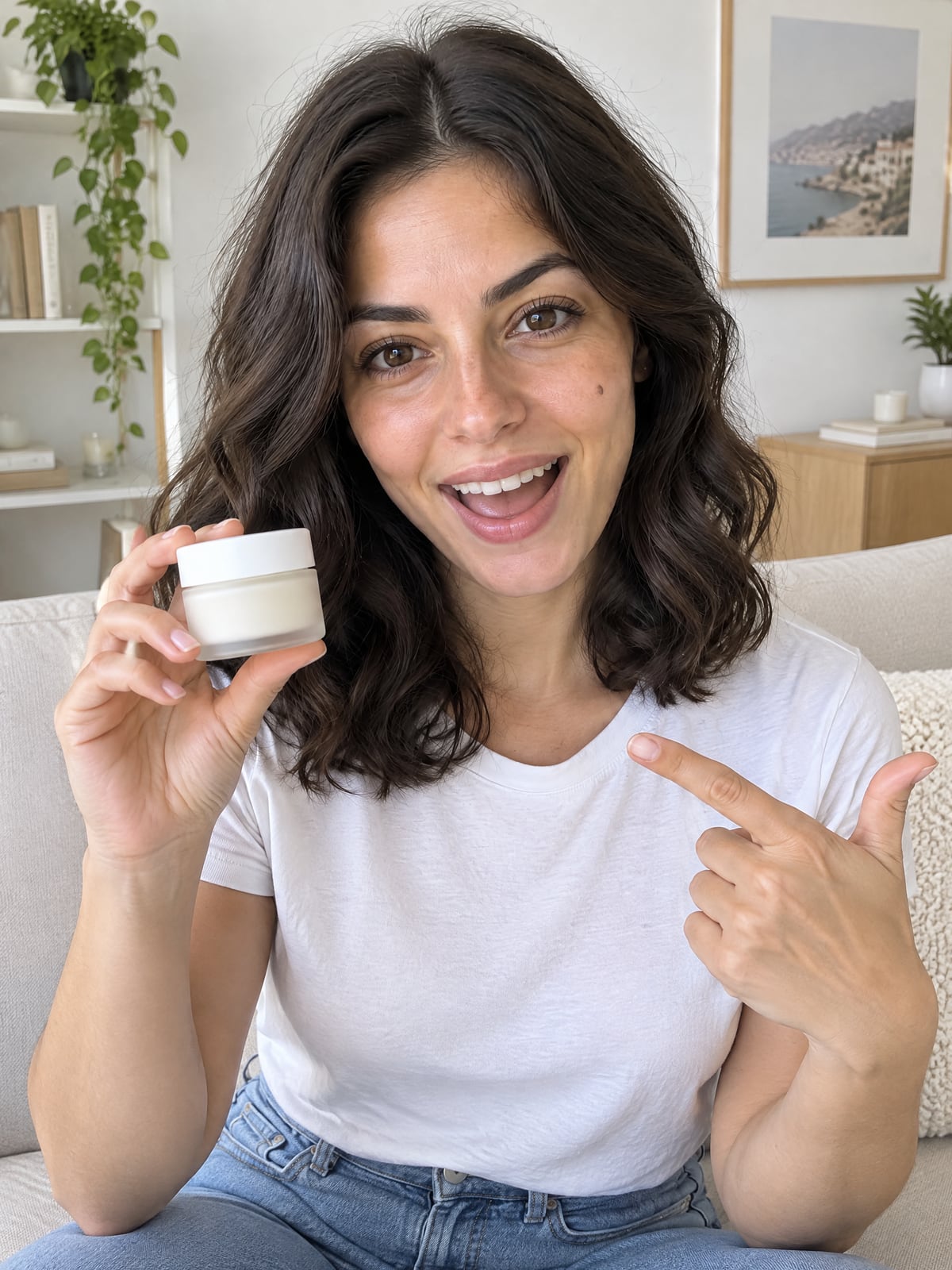
The subject is the exact person in the reference photo. Keep their face structure, eye shape and colour, nose, lips, skin tone, hairstyle and hair colour, body build and age recognisable in every detail — a follower who knows this person must recognise them instantly. Do not replace them with a generic model, do not change their age, do not slim or reshape their face or body, and do not add any other people to the scene. Scene: holding up a small unbranded product (a skincare jar, a pair of headphones or a sleek gadget — no logos) toward the camera with an excited expression, sitting on a sofa or at a vanity with a ring-light glow in the eyes, a tidy bright living room behind. Outfit: casual everyday wear that suits the scene — a plain tee or knit, jeans or shorts, clean sneakers; no logos. Framing: vertical feed photo, head to hips. Shot like a real phone photo posted by a lifestyle creator: natural skin texture with pores and fine lines kept (no airbrushing, no plastic smoothing), realistic lighting with soft shadows, slight depth of field, candid framing. Photorealistic. No text, no captions, no watermark, no logos, no brand marks, no other faces in the frame.
Den ursprünglichen Prompt lesen
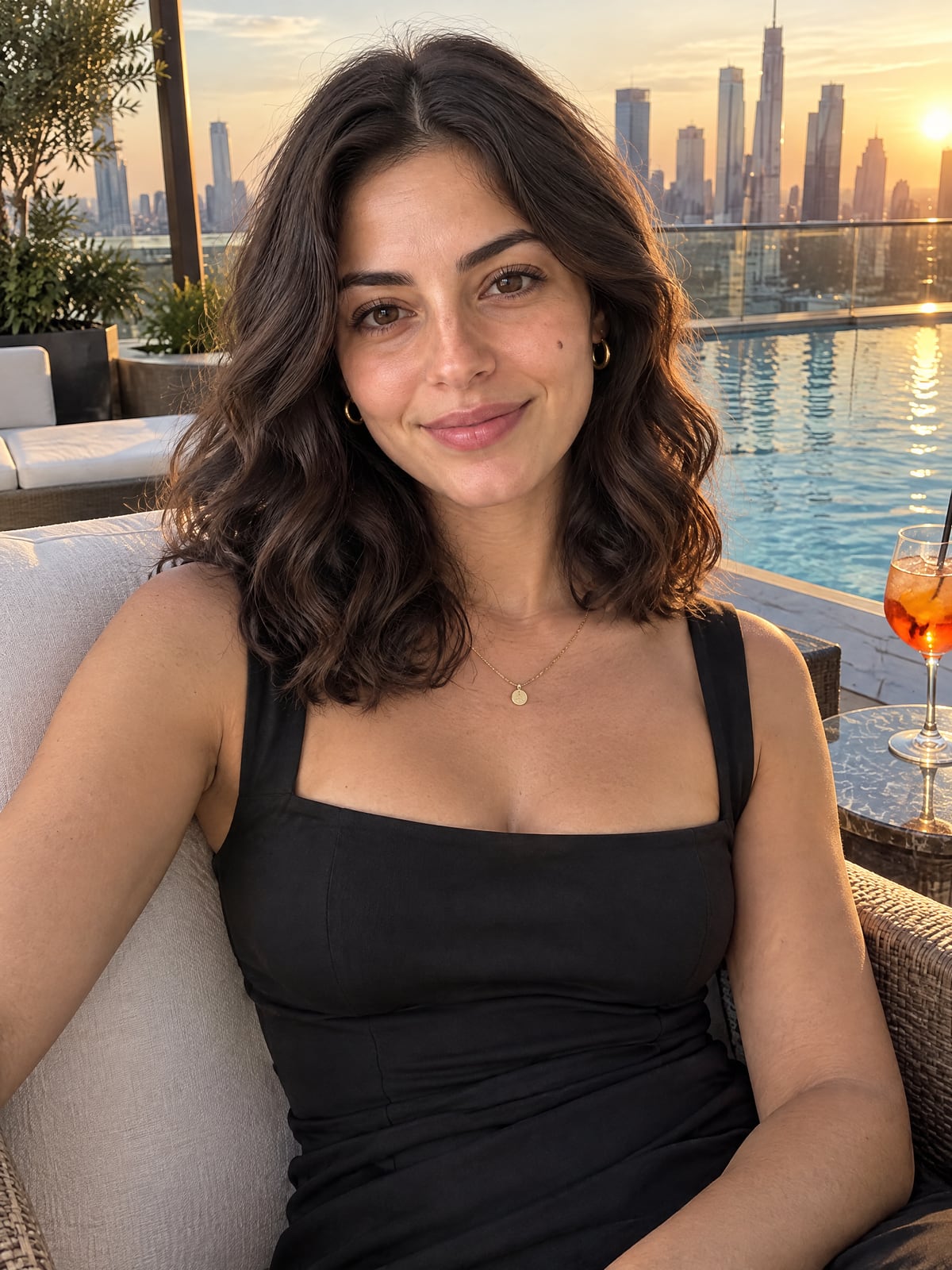
The subject is the exact person in the reference photo. Keep their face structure, eye shape and colour, nose, lips, skin tone, hairstyle and hair colour, body build and age recognisable in every detail — a follower who knows this person must recognise them instantly. Do not replace them with a generic model, do not change their age, do not slim or reshape their face or body, and do not add any other people to the scene. Scene: lounging by a luxury hotel rooftop pool with a city skyline behind, a drink on the side table, late-afternoon sun, polished editorial-travel feel, relaxed and unbothered. Outfit: polished evening look — an elegant dress or a fitted dark suit, subtle jewellery, well-groomed; tasteful, fully clothed. Framing: vertical feed photo, head to hips. Shot like a real phone photo posted by a lifestyle creator: natural skin texture with pores and fine lines kept (no airbrushing, no plastic smoothing), realistic lighting with soft shadows, slight depth of field, candid framing. Photorealistic. No text, no captions, no watermark, no logos, no brand marks, no other faces in the frame.
Das Laden eines Beispiels füllt einen Entwurf. Überprüfen Sie die Einstellungen und das aktuelle Angebot, bevor Sie generieren.
Sagen, was gleich bleiben muss
Der Produktions-Prompt benennt die Identitätsvorgaben vor der Szenenbeschreibung. Er verlangt ein natürliches Handyfoto-Aussehen statt eines polierten generischen Models. Für die eigene Serie eine kurze spezifische Anweisung nur dann hinzufügen, wenn die Voreinstellung sie benötigt.
Jede Szene aus dem genehmigten Original generieren, statt jedes neue Bild von einem driftenden vorherigen Ergebnis abhängig zu machen. Einen Kontaktbogen führen, damit Änderungen über die Serie hinweg offensichtlich werden.
Identität und Styling als separate Entscheidungen verwalten
Eine konsistente Identität kann unterschiedliche Kleidung tragen, aber eine Produktkampagne kann dasselbe Outfit benötigen. Vor dem Generieren entscheiden, welche Details fest sind. Referenz, gewählte Szene, Outfit und Bildausschnitt zusammen mit dem genehmigten Ergebnis aufbewahren.
Die dedizierte Influencer-Seite erstellt Lifestyle-Fotos; die separate Subjekt-Bibliothek kann wiederverwendbare Referenzen und Charakterbögen speichern. Nicht davon ausgehen, dass jede Fotoausgabe automatisch zu einem gespeicherten Charakter wird oder in jedes Video-Tool übertragen wird.
Ein genehmigtes Foto in ein kurzes Video verwandeln
Das stärkste Standbild wählen und einen Image-to-Video-Workflow öffnen. Mit einer kleinen Kopfdrehung, einem zurückhaltenden Gang oder einer sanften Kamerabewegung beginnen. Die Aktion einfach genug halten, um sie prüfen zu können.
Das genehmigte Bild in den Videoentwurf übernehmen und das Gesicht während der Bewegung vergleichen. Bei Verwendung einer Rollen-Ersetzungsvorlage prüfen, ob die ausgewählte Szene den Bildausschnitt und die Körperproportionen des Charakters unterstützt. Die Videoqualität muss getrennt von der Fotoserie bewertet werden.
Für eine Serie budgetieren, die tatsächlich verwendet werden kann
Zuerst eine Szene erstellen und sie beurteilen, bevor man sich auf die verbleibenden vier festlegt. Das Live-Angebot für das gewählte Bildmodell und die Qualität verwenden. Das Ändern von Modell oder Auflösung ändert die Kosten und kann das Aussehen verändern.
Die Beispiele dokumentieren den Produktions-Workflow und die ursprüngliche Referenz. Sie sind keine gemessene Identitäts-Erfolgsrate, kein automatisches Veröffentlichungssystem und kein Versprechen von Follower-Wachstum. Einen Plan rund um das genehmigte Ausgabevolumen wählen, nicht um die Anzahl der Generierungen, die man zu behalten hofft.
Fragen vor dem Generieren
Wird jede Szene das Gesicht perfekt bewahren?
Nein. Referenzvorgaben helfen, aber jedes Ergebnis muss geprüft werden. Szenen- und Styling-Änderungen vereinfachen, wenn das Gesicht driftet.
Kann ich eine virtuelle Person erstellen, statt mein eigenes Foto zu verwenden?
Ja. Zuerst einen fiktiven Charakter erstellen und genehmigen, dann seine Referenz in unterstützten Workflows wiederverwenden.
Erstellen die Foto-Voreinstellungen automatisch ein Video?
Nein. Die Influencer-Seite erstellt Standfotos. Einen Image-to-Video-Workflow für Bewegung verwenden und dieses Ergebnis getrennt prüfen.
Tarife und Credit-Pakete vergleichen
Kennen Sie den benötigten Umfang? Vergleichen Sie Mitgliedschafts-Credits mit einem einmaligen Credit-Paket, bevor Sie wählen. Ihr Entwurf bleibt unter Ihrer Kontrolle.